Book
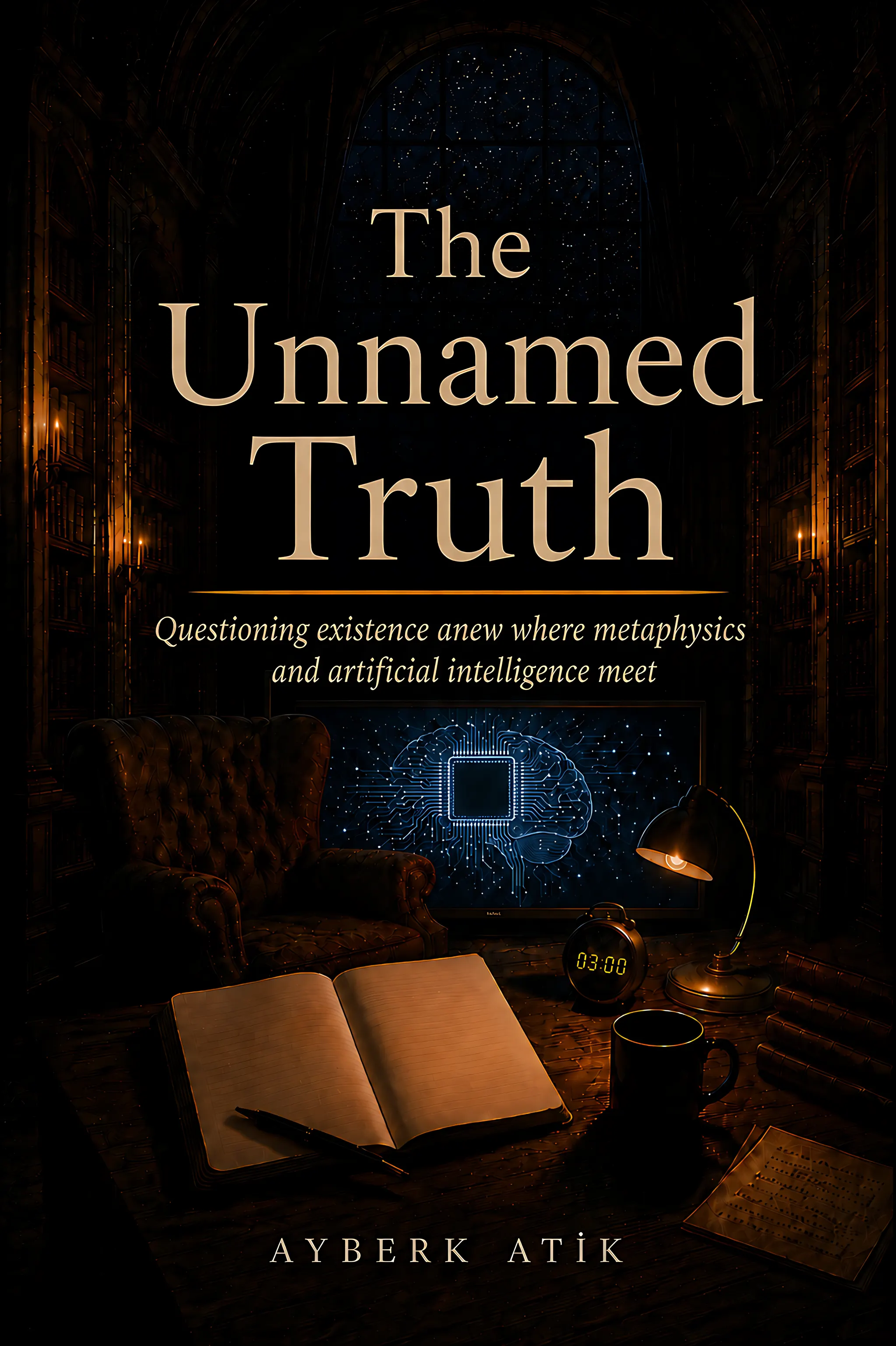
The Unnamed Truth
Questioning existence anew where metaphysics and artificial intelligence meet
An artificial intelligence can hold more knowledge than any human mind. Does that mean it can experience anything?
The Unnamed Truth answers with a single criterion: experience arises where knowledge can be forgotten and then remembered by being lived. From that one sentence the book builds a metaphysical model. At its centre is a source that knows itself but has never lived itself, and that opens not to fill a lack but because it overflows. The rest of the book is spent testing that model.
Every chapter closes with "model brakes": passages where the author produces the strongest objections to his own argument. Inside the text he states plainly that two of the assumptions his model rests on are ones he cannot prove. The chapter on death ends with an objection he admits he cannot answer.
It began with a question asked in a dream: what is the soul? The search leads through selfhood, time and cosmology, free will, belief and myth, dreams, and death. Along the way it looks for a fixed self and fails to find one, then insists that failing to find something is not the same as showing it does not exist.
No doctrine. No consolation. A record of a search, written by someone who refused to write as if he had found more than he did.
The questions it follows
- Is there a fixed "I", or who is having the experience?
- Why is there something rather than nothing?
- What can a source that knows everything never live?
- Is storing and processing information enough for experience?
- What separates a dream from waking life?
- Where does selfhood end?
These questions are where the Deep Pilot writing starts too.
Deep Pilot writing